




Book Description
A profound and illuminating exploration of the mythology of gay uncles and the meaning of queer bonds across generations
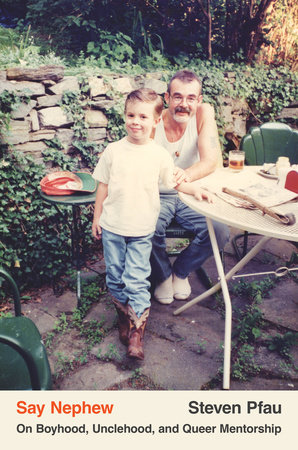
In Say Nephew, Steven Pfau blends memoir and criticism to celebrate the gay uncles who shape our sense of queer identity, culture, and history. The most influential figure in Pfau’s gay boyhood—the mentor who set the standard for all his future mentors—was his uncle Bruce.
A charismatic storyteller with a Burt Reynolds–esque bravado (and a mustache, leather jacket, and pair of cowboy boots to match), Bruce came out in 1950s Memphis and lived in New York City through many of the defining events of the gay liberation era. Bruce was both a unique fixture in his nephew’s upbringing and a link in a long lineage of uncles, literal and figurative, who have offered various forms of queer tutelage to younger men.
But what role is the nephew supposed to play in these relationships? And who does he become once his uncles are no longer there to guide him? Both a coming-of-age story and a wide-ranging study, Say Nephew is a wholly original and expansive consideration of queer mentorship.
Praise For This Book
Debutiful, A Most Anticipated Book of the Year"A beautiful ode to family and coming into your own. A blend of traditional memoir with a larger scope exploring mentorship, this book was a pleasure." —Adam Vitcavage, Debutiful
"A richly detailed, thought-provoking celebration of American independence . . . A fond, uniquely crafted appreciation of the myriad wonders of unclehood." —Kirkus Reviews
"Essayist and editor Pfau debuts with an elegant and smart collection . . . [He] seamlessly blends memoir with art and literary criticism, and his eloquent prose and wit make this stand out. He is a writer worth keeping an eye on." —Publishers Weekly
"Say Nephew is both a memoir and intellectual journey on the complex gay relationships between younger and older men. Courageous, and often written with poetic subtlety, this book explores both the dark and light aspects of these bonds, which challenge and enlighten conventional ideas." —Jennifer Clement, author of The Promised Party
"In this fluid, sexy, and delightfully campy inversion of autotheory, Steven Pfau performs a kind of alchemy, turning grief into comfort, loss into nourishment. I can’t remember the last time a stylish debut brimmed over with such wisdom, and such stern tenderness." —Patrick Nathan, author of The Future Was Color
“The uncle relation is said to be diagonal, to the side of a parental one, already queer in that way; but for Steven Pfau that doesn’t preclude direct confrontation. The magic act of this resourceful and remarkably sensitive cultural study of the figure of the gay uncle is that, by the end, it doubles as an open and personal account of becoming ‘the kind of person who isn’t afraid of his own desires.’ In the company of this clear-eyed seeker, this companionable guide, both the archive and the steam room are less apparitional.” —Brian Blanchfield, author of Proxies
“Steven Pfau’s riveting debut book investigates a genre of relationship—gay uncle, gay nephew—rarely given air time and usually shrouded in mystification. His beautifully sculpted dramatic scenes, and his deft interludes of intellectual commentary, blend seamlessly to form a vital, indispensable memoir that operates with the eloquence of fiction and the analytic rigor of a ‘case study’ passionately metamorphosed into an elegiac, liberatory love letter.” —Wayne Koestenbaum, author of My Lover, the Rabbi