




Books
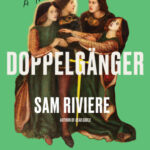
Doppelgänger
A Novel
A hilarious, scathing, and absurdist critique of contemporary culture set in a fictional university town in the near future where a contagious "twinning" trend has swept across the student bodyAt Northwick Author Development Academy, an elite incubator for the creative class, originality is both fetish and mandate. Its candidates arrive ravenous for distinction—only to discover, after a year of carefully engineered “disorientation,” that their work has converged into something eerily uniform.
When a student in the sophomore cohort, Carl Sample, announces his intention to provoke a stranger into punching him—an act pitched as both personal exorcism and artistic experiment—the action seems grotesque, comic, and vaguely prophetic. Before Carl can enact his plan, another student is assaulted in town. This emerging crisis of coincidence binds the cohort in a tightening web of surveillance and mythmaking, as intention and event fall fatally out of sync. Watched constantly by the Academy’s hidden media unit, the students begin to resemble copies of one another—twinned in fear, ambition, and aesthetic drift.
Doppelgänger is fiction at its most clever, most engaging, and most self-reflective. The reader embarks on a quest with an uncertain outcome, and Riviere keeps us on our toes throughout with his wit, his stylistic brilliance, and his matchless mind. Is this a scathing critique of contemporary culture or a virtuoso game of cat and mouse? Who’s to say? A bit of both, probably.
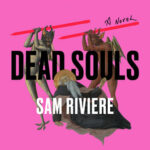
Dead Souls
A Novel
For readers of Roberto Bolaño's Savage Detectives and Muriel Spark's Loitering with Intent, this "sublime" and "delightfully unhinged" metaphysical mystery disguised as a picaresque romp follows one poet's spectacular fall from grace to ask a vital question: Is everyone a plagiarist? (Nicolette Polek, author of Imaginary Museums).A scandal has shaken the literary world. As the unnamed narrator of Dead Souls discovers at a cultural festival in central London, the offender is Solomon Wiese, a poet accused of plagiarism. Later that same evening, at a bar near Waterloo Bridge, our narrator encounters the poet in person, and listens to the story of Wiese's rise and fall, a story that takes the entire night—and the remainder of the novel—to tell.
Wiese reveals his unconventional views on poetry, childhood encounters with "nothingness," a conspiracy involving the manipulation of documents in the public domain, an identity crisis, a retreat to the country, a meeting with an ex-serviceman with an unexpected offer, the death of an old poet, a love affair with a woman carrying a signpost, an entanglement with a secretive poetry cult, and plans for a triumphant return to the capital, through the theft of poems, illegal war profits, and faked social media accounts—plans in which our narrator discovers he is obscurely implicated.
Dead Souls is a metaphysical mystery brilliantly encased in a picaresque romp, a novel that asks a vital question for anyone who makes or engages with art: Is everyone a plagiarist?